Wednesday, March 8, 2017

Unit 7 Reflection

This unit was about ecology and the main ideas behind it: homeostasis, interdependence, and cause and effect. Various biotic and abiotic factors make up habitats, which make up ecosystems. We learned that the food chain is made up of autotrophs, heterotrophs, and decomposers. Food webs show the passing of energy between levels more accurately. We also learned about the energy in the food webs, and that productivity is highest near the equators. 10% of energy is passed on to the next level. Higher level consumers exist in smaller proportions because of this. In population ecology, population is measured by density and dispersion. Factors that affect the population include immigration, emigration, births, deaths, disease, predators, abiotic factors. The 2 growth models are exponential (doubling), and logistic (rate of increase slows as carrying capacity is reached. Species inter depend on each other, resulting in boom bust cycles of the population. We learned about biodiversity, which is the number of species in an ecosystem. We are in the middle of the 6th mass extinction due to species loss. Species loss occurs from habitat loss, introduced/exotic species, over exploitation, and climate change. Some of the things we can do to curb this mass extinction is to identify and protect hotspots, protect what we already have, plan to have movement corridors, and restore habitats by jump starting succession.

Lastly, we also watched the documentary, "Bag it", which explained the magnitude of the plastic problem we have. I learned some interesting statistics, and realized that America, almost single-handedly causes this problem. Now, I actually know what it means when a water bottle says "BPA free" on the bottom. I hope I can use this knowledge and apply it to my 20 Time project (the Not Just Trash Project), and help people find ways to reduce their waste.

By taking the assertiveness and self awareness survey, I realized that my 2 highest numbers were assertive and aggressive. I think that in the Conservation project, I may have been aggressive on certain things that I could have just let go or worked out a compromise. I will try to work on being more assertive and less aggressive.

The hardest part of this unit was and still is really understanding what will happen when we eventually run out of resources. What will happen when we reach our carrying capacity? It is sad that the human race got ourselves into this mess, and I hope technology will improve so that some of us can move to different planets. Otherwise, life as we know it, may be gone. Actually, unless the TRAPPIST-1 planets could actually have life.

Here is the link to my first ever post on this blog on what biology is. A lot of it has to do with this unit:
http://brilliantbiologyblog.blogspot.com/2016/09/what-is-biology-collage.html

Tuesday, January 31, 2017

Unit 6 Reflection


Unit 6 talked about biotechnology, how it works, and its applications. 

Biotechnology itself is the study and manipulation of living things to benefit ourselves. Its used industrially, environmentally, Medically, Pharmaceutically, agriculturally and diagnostically. This includes fermentation, gene therapy, forensics and identification, and GMOs. 

Technologies include Polymerase Chain Reaction, Gel Electrophoresis, and Sequencing. PCR is used to yield millions of copies of a portion of DNA for it to be further examined. The strand is denatured and a primer is added to both ends. Then DNA polymerase yields the new double stranded DNA. This repeats itself. Electrophoresis runs a current through bands of DNA on a gel. The shorter bands move farther while the longer bands don't move as much. Sequencing determines the exact order of bases in a strands of DNA, resulting in an electropherogram. 
We also learned about recombinant DNA which is inserting foreign DNA into an organism. The DNA fragment is cut by a restriction enzyme and put into the plasmid, which is resistant to an antibiotic. The new bacteria is then grown and the protein is extracted. This created transgenic or GMOs.

Bioethics it the study of decision making as applied to biology. Based on your morals and values, you can take a stance on an issue. You use this to answer questions like: Is it okay to take extra napkins from a fast food restaurant?


Lastly, we did the pGLO lab, where we inserted a pGLO plasmid into e.coli. We placed them on different petri dishes and the dish with arabinose, broth, and ampicillin glowed under UV light.

Overall, this unit was a little tricky at first. I didn't understand recombinant DNA or the technologies until we did the labs. After doing the candy electrophoresis lab and the pGLO lab, it made much more sense to me.

I would like to learn more about the forensics side of biotech and agricultural applications. I also would have liked to do a lab that inserted DNA into a plasmid using restriction enzymes. I want to learn more about the successes and failure of biotech experiments, because I think it would be very funny and interesting.

Monday, January 30, 2017

pGLO Lab Conclusion


1.
Obtain your team plates.  Observe your set of  “+pGLO” plates under room light and with UV light.  Record numbers of colonies and color of colonies. Fill in the table below.
Plate
Number of Colonies
Color of colonies under room light
Color of colonies under   UV light
- pGLO LB
N/A we didn't do this not part of lab
- pGLO LB/amp
0no coloniesno colonies
+ pGLO LB/amp
12milky whitemilky white
+ pGLO LB/amp/ara
16milky whiteneon green
2.
What two new traits do your transformed bacteria have?
The transformed bacteria have the ability to glow under UV light and resistance to the antibiotic, ampicillin. 


3.
Estimate how many bacteria were in the 100 uL of bacteria that you spread on each plate. Explain your logic.

According to bio.net, bacteria with antibiotics divide every hour, and those without reproduce avery half hour. According to this method, that would result in 1048576 cells in a colony, multiply that by 16 and you get: 16777216

4.
What is the role of arabinose in the plates?
Arabinose is the trigger that makes the growing fluorescent protein present.
5.
List and briefly explain three current uses for GFP (green fluorescent protein) in research or applied science.
Scientists use GFP as a marker of proteins.They tag it to specific proteins in a cell and monitor the activity of it. It doesn't interfere with processes that occur within the organism but can be used to study the processes that occur. It is also used to track the spreading of a virus because the protein is inherited as the virus divides. It is also used commercially in pets like fishes to make them look interesting.
6.
Give an example of another application of genetic engineering.

Genetic engineering is used in agriculture to create crops with more desirable traits. An example of this would be corn. It is modified to be resistant to a pesticide called herbicide glyphosate which is a weed killer.


Thursday, January 19, 2017

Candy Electrophoresis Lab

1)
a. The dye bands looked about the same length as the reference bands, maybe a little bit smaller but not too much.
b. The dyes were the same colors as the reference band, but slightly different shades or hues.
c. The blue and yellow from the candies stacked up to form one band with the yellow on top and the blue below.
d. All of the dyes moved in the "right" direction.

These dyes might be slight variations in the specific candy used. Also, it could depend on how much of the dye you squirted into the gel, producing a bolder or lighter color.

2) Fast green FCF, and Citrus red 2 have similar structures to the dyes used in this lab, so they might migrate similarly.

3) Dog food manufacturers might put artificial food colors in dog food to appeal to the humans who are buying them. They don't appeal to the dogs because the dogs don't see the colors.

4) I think I eat mostly food that doesn't have dye in it, especially since I'm vegetarian. But food that I eat occasionally that have dyes in them could be chips, gummies, and cake.

5) length and speed control the distance that the colored dye solutions migrate.

6) and electrical current helps move the dyes through the gel.

7) Smaller molecules get more excited and move faster and farther. Larger molecules get less excited and move slower and less far.

8) They would separate in the following order from closest to farthest: 600, 1000, 2000, 5000.


Tuesday, January 10, 2017

New Year Goals

1) I will do my homework the day it is assigned rather than the night before to feel less stressed. I will do this by making better use of tutorials to get ahead on work and not using "I didn't have time" as an excuse.

2) I will not distract myself when doing homework and I'll finish it fast so that I can get to bed at a good time, and therefore be happier and more energized when I come to school the next day.

Thursday, December 15, 2016

Unit 5 Reflection

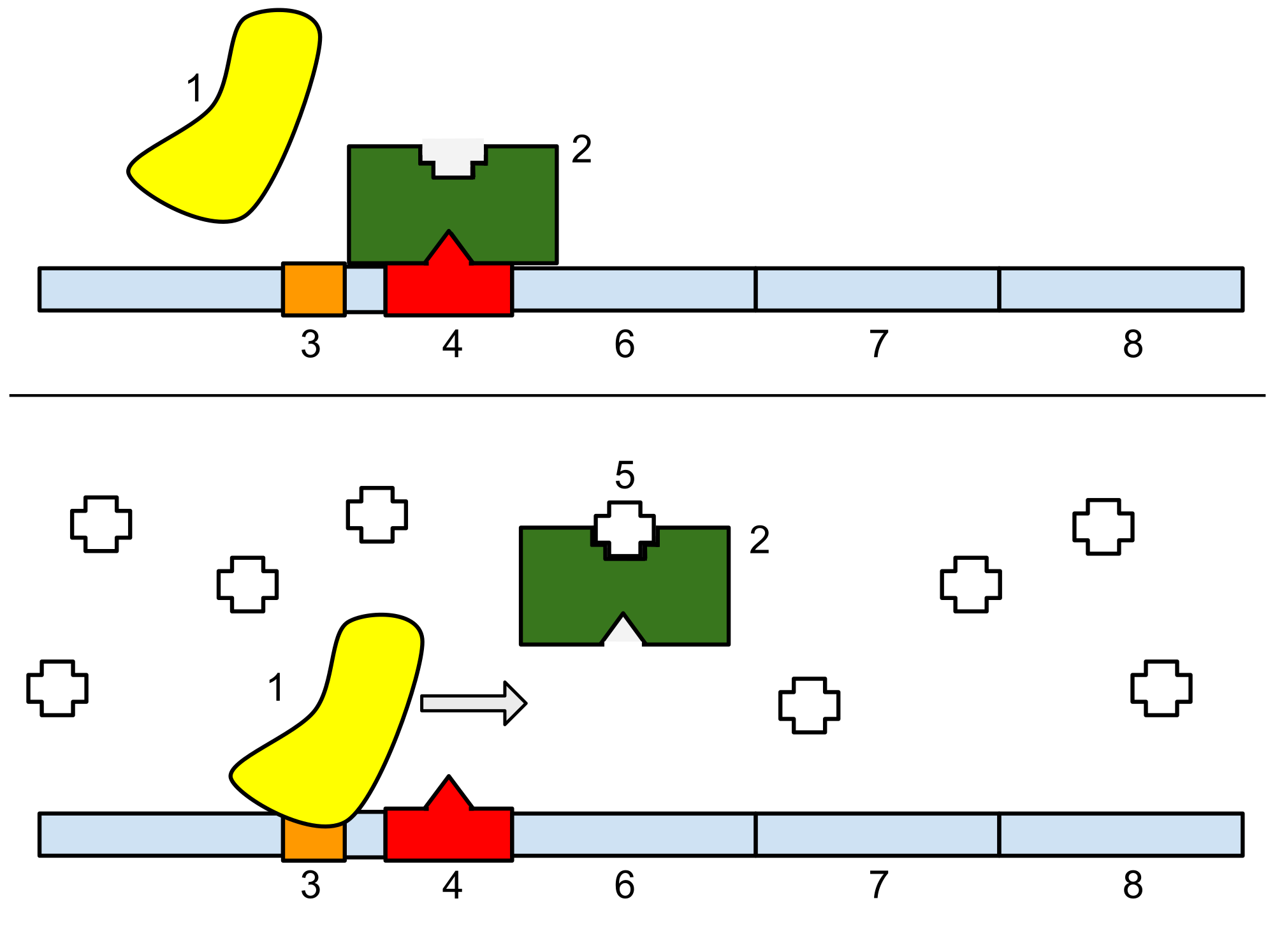
This unit was about our genetic code, how it replicates, how it is used to make proteins, errors that can occur, and how organisms control how traits are expressed. Our DNA is unique because it is wound up in a tight double helix. When it replicates, it unzips, and complementary bases join to form 2 strands of the DNA. DNA is made of A, T, C, and G. However, when it replicates, errors, or mutations can occur. While some may be as simple as a substitution, others, like insertion and deletion can completely change the protein that is being coded for and possibly be fatal. DNA contains instructions for the cell to make proteins. This process of making proteins based on DNA happens in multiple steps. First, DNA is transcribed into mRNA, adding the complementary bases, but with uracil instead of thymine, and is also single stranded. Then, the mRNA travels to the ribosome, where it is translated into amino acids by every 3 bases (codons). The amino acids form a chain, which twists and folds to form proteins. The final main idea from this unit is that although every cell contains the genetic code for all proteins, only certain genes are actually expressed. This is called regulation, so that the cell doesn't waste energy making all of these proteins it doesn't even need. For example, there is the lac operon. The DNA is transcribed based on the repressor, and whether it fits on the operon. Also, in order for DNA to fit into such tight spaces, it is wrapped around proteins called histones, forming nucleosomes. This is what makes up the chromosomes.

I mostly struggled with gene expression and regulation, because it was a new idea. The lac operon was a bit confusing at first too. I enjoyed learning about actually walking the dogma. I learned a lot more about the connection between what a cell does, and how it knows to do that. I also enjoyed looking up random, weird mutations that people have and learning about what causes them (see my previous blog post for a video of a family that walks on all fours and behaves like prehistoric hominids). I think I am getting better at not getting discouraged when I don't get something in a vodcast. Now, I am more confident, and even if I don't get it the first time, I know I will understand after recapping and some studying.
Image result for operon

I want to learn more about stem cells. I think its very interesting that they can morph into different kinds of cells. I also want to learn more about tumors and cancers, and how they can be caused. Lastly, I want to learn about expression and regulation in humans. 

Tuesday, December 13, 2016

Protein Synthesis Lab Conclusion

Proteins are made in different steps that occur in different places in the cell. First, in the nucleus, DNA is transcripted into mRNA by the enzyme, RNA Polymerase. Then the mRNA is transported through the cytoplasm, to the ribosome. Then, each codon, or set of 3 bases, is translated into protein language, or amino acids. Amino acids join to form a chain, called a polypeptide. The chain then bends, folds, and twists, eventually forming a protein.

Based on the results, substitution made the least difference, but frameshift mutations like insertion and deletion made the most flawed proteins. When a substitution happens, there is still a chance that the same amino acid will form, or there will just be one small error. But insertion and deletions towards the beginning of the sequence, completely changed the rest, starting from the mutation, onwards.

The mutation that had the absolute greatest effect was insertion or deletion of one of the first 3 bases of the sequence. This meant that the first amino acid, "MET", was altered, therefore there was no start codon. This means that there would be no protein because the translation never even started! This type of insertion that happened at the beginning affected the protein the most.

Many mutations could be in my genes, yet I don't even know it. Because some of them have little to no effect, but others can be fatal, you never know what mutations might exist in you. An example of a disease caused by a mutation is Uner Tan Syndrome. People with this disorder walk on all fours and behave like apes. Its like going backwards through evolution almost! Below is a documentary featured on BBC2 in 2006  about a Turkish family with this disorder, called "The Family that Walks on All Fours."